I want to take a simple look at the future of energy and the question “Is it a risk? And if yes, what can companies do about it?"
I will do this is a manner that many people might in that I take a quick look at the world and do a little internet surfing. And then add my curiosity hat.
So lets start with some simple charts taken from virtual capitalist.
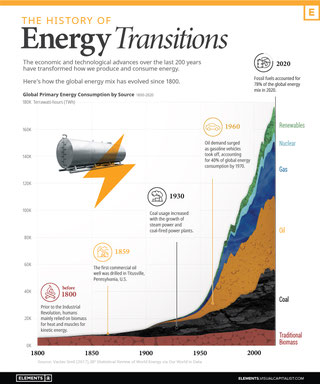
Firstly we see the growth of the main fuel types over the last 200 years (until 2020) on a global scale. Clearly in 2022 the graph extends even further upwards but a small change in percentage distribution.

If we simply focus on phasing out coal as one of the main sources of carbon dioxide then we see two things. Firstly the trend is still upwards even though governments have agreed, and that already many years ago, that they wanted to reduce dependence on coal. From this chart we see the dramatic change that is required from today. If we are still going in the opposite direction then this is a challenging target.
It basically means a global fast track agreement with actual executed actions to not only, slow down but stop and reverse the current trend.
The change from horse draw vehicles to automated ones was maybe such a change but in todays world, where more technology is electrically powered is it feasible?
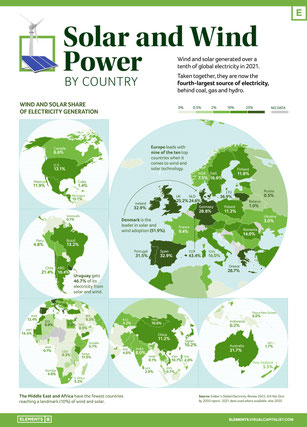
There is a massive positive change in solar and wind power. But at the same time we already hear about operating license being delayed and the issue of recycling of the end of life material.
In countries with a lower population density this could still be feasible but I have personally experienced two aspects of this. Firstly, small woodland areas being replaced with solar power farms and have been blinded by the sun reflecting off the glass while driving along a highway. Secondly close to my home was a 110m high tower that was throwing off ice in winter at high velocity and the population of eagles and bussards was certainly impacted by the blades.
Not to mention the dust and particulates in the atmosphere also affect efficiency and in Europe, the affect of sand storms in the Sahara could have impact an impact. Off shore is great but care needs to be taken with increasing storm frequency and size and distribution to the customer.
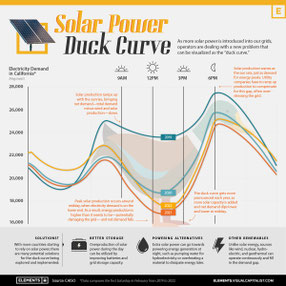
In addition solarpower has the “duck curve” profile as there is only sunshine during the day but peak usage is mornings and evenings when the maximum generating power is lower. Meaning we need to store the power generated in relatively large batteries with the then additional requirement of expensive metals.
This leave two additional points open.
Firstly the need of materials for renewable energy production and secondly the distribution to where the power is needed.
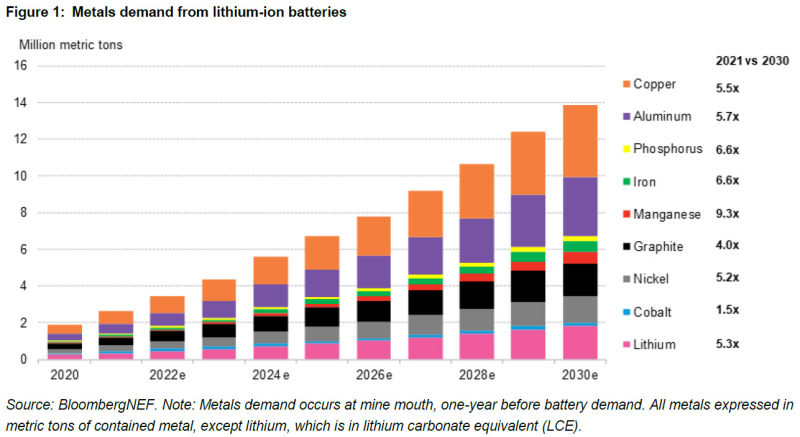
So in terms of metals for solar panels and batteries which is the strategy of many governments and the blind following of automobile manufacturers, we see there needs to be an average of 5x growth in key metals production. Until 2030, so 8 years. Even if we recycle this will incur a price. In terms of damage to the earth, it comes out of the ground, and environmental impact to the atmosphere. And many sources are in geopolitically “interesting” areas.
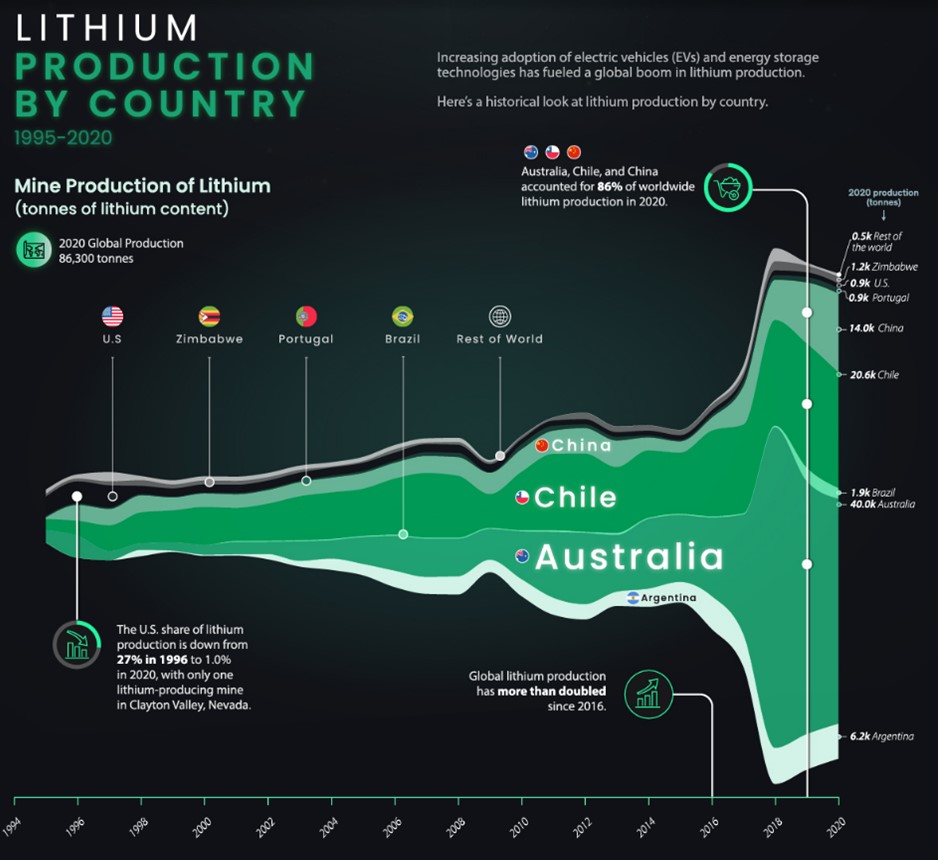
Lithium is a good example of where the western world wants batteries but the lithium is coming from Australia, Chile and china.


In 2011 the united nations university concluded that the world could go 100% renewable by 2050. But as we did not change so much, as this was an isolated study and as we are still increasing coal usage then the challenge is still there. And the report noted its only achievable if we reduce energy usage. We are not doing that.
So where will all this energy be needed? In the cities and close to the cities as production facilities, and logistics, will try to reduce their footprint by bring it close to customers.
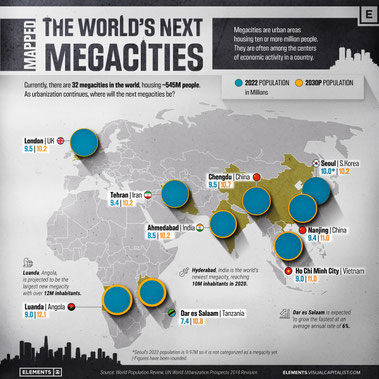
Over half of the future population will be in India and Asia arena. as shown in the graphic below. This will mean a massive change in solar and wind generation and also distribution if these are the alternatives, and in an 8 year time frame, and a 5x growth in metals generation in the same period.
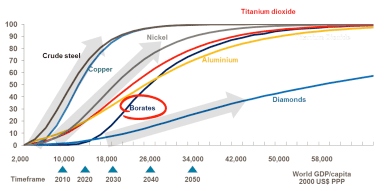
The next question is one of saturation. Meaning when will the production of these critical metals be equal to or below the required amount. Resulting is shortages and price hikes. The saturation point for some of these metals will be in 2030 with many more becoming saturated by 2040. So 2050 goals are almost impossible to achieve unless something changes. But not only in supply and d3emand of energy but also in the use of metals, the production of those metals and the innervational levels needed to identify alternative materials that can be used. As the lifetime of some of this equipment is 10, 20 or even 30 years then recycling of the material is a longer term issue but does not solve the shorter term problem.
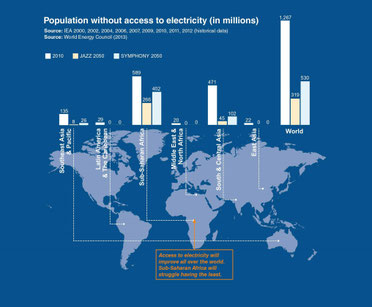
The united nations university conducted a study which highlighted the positive effect that less of the global population would be without electricity. The problem is this was in 2013. since then we have had COP 21 and COP 26 and with the current changes, and the speed of change, this prognosis is possibly wrong.
As we speak about 8 years in the future (2030) then it would normally come into the risk managers longer term emerging risk landscape, for the mining sector its 25 years so already in the lists. Naturally I look at energy as a silo, there is also water, food, etc which will be occurring at the same time.
So consequences could be:
- All governments go back on their promised agreements as they are impossible to achieve. This could result in civil and social unrest as the population will question the ability of governments to govern even more than they are currently doing.
- There will be blackouts and brownouts, already predicted for the UK in the coming years as the gap between supply and demand gets wider. currently in the UK its 80% of demand is covered the rest being made up from Europe but that will change.
- A new technology, ie fusion, comes along but that is not targeted until 2054 and it will potentially be a similar scenario as nuclear power with the initial idea being good until there is an accident.
So what does the risk manager do?
Is decentralized power generation, water treatment the new future?
Write a comment